Back to cases
CASE 01 / Maintenance

HAMR-E: electroadhesive crawling on engine walls

Validate centimetre-scale locomotion on vertical, inverted and curved conductive surfaces.

Harvard · HAMR-E2018
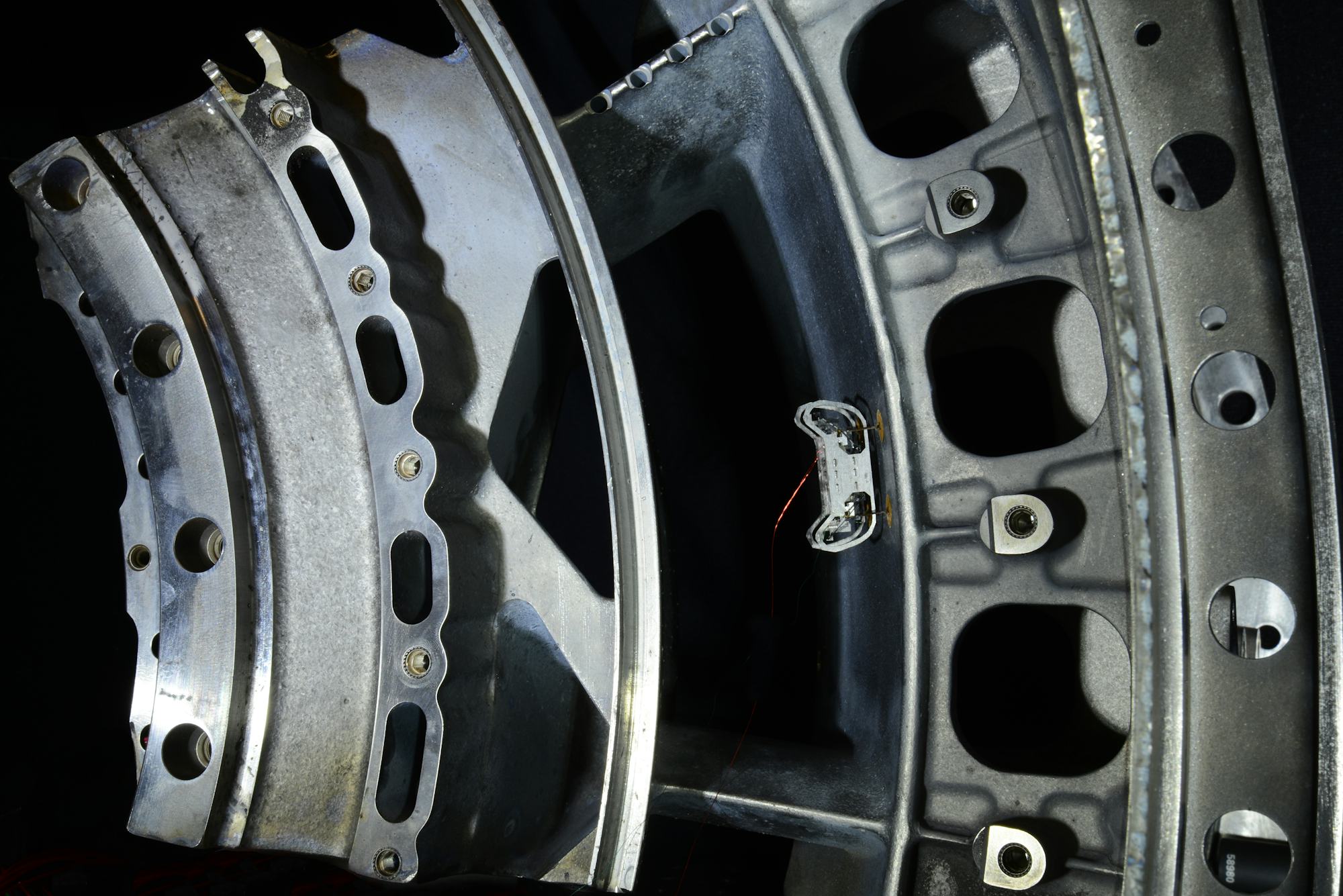
HAMR-E on a curved engine-section wall; its tether is visible.
HAMR-E on a curved engine-section wall; its tether is visible.Wyss Institute at Harvard University

Watch the video

Tethered motion on vertical, inverted and curved surfaces. · Harvard University · 1080p source video

If the player is unavailable, visit the original source above.

01 / STUDY

Mechanism and experiments

The tethered 4.5 cm, 1.48 g robot uses electroadhesive pads and passive origami ankles to crawl on vertical, inverted and curved conductive surfaces.

02 / CONTEXT

Test conditions and scope

Tests validate tethered locomotion. Autonomous camera inspection remains an application goal; this is not a 10 mm wireless SWARM unit.

03 / SOURCE

Papers and primary sources

Robots with sticky feet can climb up, down, and all around
Wyss Institute at Harvard University
Wyss Institute, 2018 · Science Robotics

Further reading

EXPERIMENT / IMAGES

Experimental images
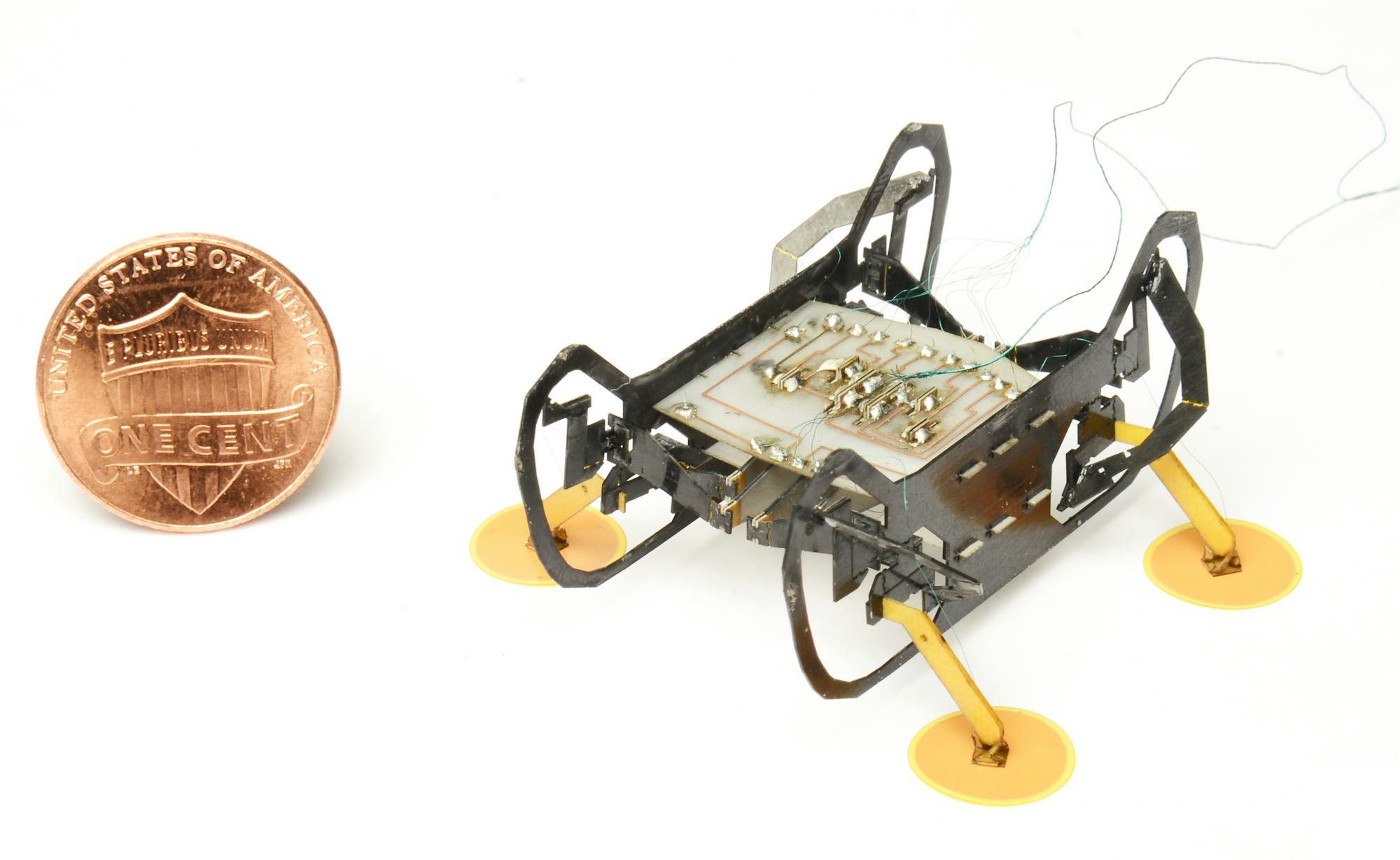
HAMR-E prototype beside a coin for scale.
HAMR-E prototype beside a coin for scale.Wyss Institute at Harvard University